ByJohn A
How Blockchain Technology Powers Crypto
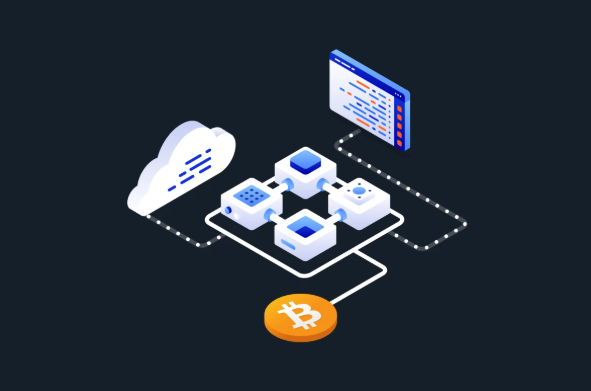
Blockchain provides a tamper-evident ledger distributed across a network. Transactions are recorded in blocks, secured by cryptographic hashes and synchronized via consensus. Smart contracts embed programmable rules that automate enforcement without central authority. Together, these elements enable verifiable transparency, decentralized governance, and programmable value transfer. Real-world impact hinges on tradeoffs among privacy, scalability, and energy use. The mechanisms that power crypto are not just technical; they shape incentives and governance, inviting close scrutiny of design choices and outcomes.
What Blockchain Is and Why It Matters
Blockchain is a distributed ledger technology that records transactions across a network of computers in a tamper-evident, append-only sequence.
The mechanism enables decentralized trust, traceable history, and programmatic value transfer.
It assesses governance, interoperability, and scalability while maintaining privacy implications and energy efficiency considerations.
Analysts evaluate impact on finance, networks, and autonomy, emphasizing verifiable transparency without central authority, enabling secure, constrained innovation for freedom-oriented ecosystems.
See also: newsfurrycom
How Consensus Mechanisms Keep Blockchains Secure
Consensus mechanisms secure blockchains by coordinating how new transactions are validated and added to the ledger, thereby aligning participant incentives with network integrity. In practice, these protocols deter forks, manage trust, and ensure timely finality.
The approach preserves decentralization while enhancing blockchain security, balancing throughput with resilience against adversarial behavior. Rigorous governance and transparent rules sustain durable, permissionless participation.
Cryptographic Hashes and the Basics of Smart Contracts
Hash functions serve as the cryptographic backbone of blockchain systems, converting arbitrary input data into fixed-size outputs whose properties enable secure data integrity, tamper-evidence, and efficient verification.
Cryptographic hashes underpin hashing foundations for state commitments and transaction linking.
Smart contracts introduce contract syntax, enabling deterministic code execution, automated enforcement, and verifiable outcomes without central trust, while preserving permissionless participation and auditable security.
Real-World Use Cases: Governance, Finance, and Identity on Blockchains
The practical impact of distributed ledger technology emerges when examining governance, finance, and identity applications that operate atop blockchain networks. Real-world use cases reveal governance tokens shaping decentralized decision processes, while finance leverages programmable instruments and transparent settlement. Identity on chain provides verifiable credentials and privacy-preserving control, enabling interoperable services. Together, these domains illustrate robust, auditable, user-centric digital ecosystems.
Conclusion
Blockchain technologies underpin crypto by ensuring tamper-evident ledgers, verifiable transparency, and programmable value transfer. Consensus mechanisms align participant incentives to finalize blocks without central authority, while cryptographic hashes verify data integrity and smart contracts enforce rules automatically. Real-world uses span governance, finance, and identity, illustrating scalable, privacy-conscious design trade-offs. Are these innovations sufficient to sustain trust as networks grow, or must governance and energy considerations evolve alongside technical advances to preserve systemic resilience?